



Table of Contents
Self storage costs less per month, offers flexible short-term contracts, and needs no staff to manage. Traditional warehousing suits large volume, long-term stock, but locks you into fixed leases. Vault.Rent has helped over 500 Mumbai businesses compare both models before signing a single agreement.
What Is the Real Difference Between Self Storage and Traditional Warehousing
The core difference between storage and warehousing comes down to scale, control, and commitment. A traditional warehouse is a large industrial space. It is usually rented on a three- to five-year lease, built for bulk inventory, pallet racking, and dedicated staff. Self storage is a modular unit, rented by the month, sized to fit exactly what a business needs right now.
Film production houses need one for a six-week shoot. E-commerce sellers need one that grows as their catalogue grows. Startups need one they can walk away from without penalty when plans change. This is where self storage units quietly outperform warehouse space for a huge share of Mumbai’s growing businesses.
Vault.Rent’s founder, Saurabh Kabra, started the company after running into this exact problem. He was managing props and costumes for film shoots out of a small godown at the time. That hands-on experience with production storage shaped how Vault.Rent designs its units today. Loading access is built for quick turnarounds, not long-term bulk storage.
There is also a structural difference in how the two models are staffed and operated. A traditional warehouse usually comes with its own workforce, including loaders, security personnel, and facility managers. All of this gets baked into the rent, whether a tenant needs the full team or not. Self storage strips this layer out entirely. A business books a unit, gets a key or access code, and manages its own inventory on its own schedule. This shift in ownership of daily operations is often the single biggest reason growing businesses move away from warehousing. They move on before they are ready for its full infrastructure.
Understanding this distinction early saves founders from a common and costly mistake. That mistake is renting warehouse capacity based on where the business hopes to be in two years, not where it actually stands today.
Self Storage vs Traditional Warehouse: Cost Comparison
Cost is usually the first question every founder asks, and the answer depends entirely on volume and duration.
A traditional warehouse near Bhiwandi or on the outskirts of Thane typically charges per square foot. Additional costs for security, electricity, and facility staff get layered on top of the base rent. Most warehouse leases also require a security deposit worth several months of rent. On top of that comes a minimum lock-in period that can stretch past a year.
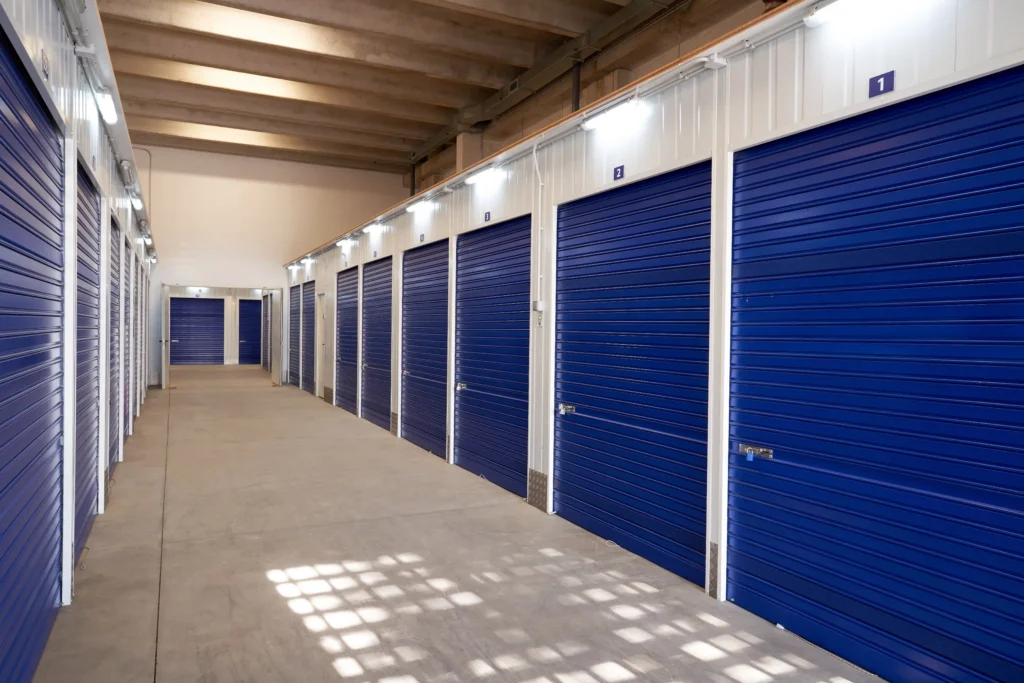
Self storage removes most of these hidden costs. Vault.Rent units are priced per unit per month. There is no separate staffing cost, no long lock-in, and no maintenance overhead. A seller storing extra inventory near Bandra or a startup based out of BKC can act fast. They can rent exactly the space they need this month. They can scale up or down the next month, without renegotiating a lease.
For a business storing under 500 square feet worth of goods, a traditional warehouse almost always costs more. It works out to be more expensive per square foot than self storage. Warehouses simply are not built for small, flexible volumes.
There is a second cost that rarely shows up in the initial quote. It matters just as much over time. This is the cost of unused space. Warehouse contracts are typically signed for a fixed area. A business that only needs sixty percent of that space in a slow month still pays for the full hundred percent. Self storage avoids this entirely, since units can be resized month to month as actual inventory changes. Over a full year, this single difference adds up. It often accounts for a large share of the total savings a growing business sees when it switches models.
Insurance is another line item worth comparing closely. Traditional warehouses often push the cost and complexity of inventory insurance onto the tenant. Separate policies are required for goods, equipment, and liability.
As per a recent study published on Research and Markets, a growing number of SMEs are choosing self storage over traditional warehousing for its flexibility, lower costs, and ability to scale. Many self storage providers, including Vault.Rent, offer simpler bundled coverage options instead. This reduces both the paperwork and the ongoing cost of protecting stored goods.
Flexibility and Lease Terms
This is where the two models diverge most sharply. Traditional warehouse contracts are built around commitment. Landlords want predictable, long-term tenants, so contracts typically run one to three years with strict exit clauses.
Self storage contracts flip this completely. Vault.Rent offers month-to-month agreements. A production house shooting a project out of Andheri can book storage for exactly the shoot duration. It can close the account the day it wraps. A seller preparing for a festive season spike near Lower Parel can add space in October. She can release it in January without any penalty.
Access hours matter too. Many traditional warehouses restrict entry to business hours only, with prior notice required. Vault.Rent facilities in Goregaon are designed for flexible access. This matters enormously for production teams working odd hours or sellers packing late-night orders.
Who Should Choose Self Storage

Self storage fits three kinds of businesses particularly well.
Film and OTT production houses benefit from short-term, project-based storage for costumes, props, and equipment between shoots. A year-long warehouse lease makes little sense for gear that gets used for six weeks. A production can rent exactly the space needed instead. It can release that space once the project wraps.
E-commerce and D2C sellers benefit from storage that scales with order volume. A seller running a small operation out of Powai does not need warehouse-level infrastructure in the first year of business. Self storage lets inventory grow module by module as sales grow.
Early-stage startups benefit from avoiding capital lock-in. Every rupee tied up in a warehouse deposit is a rupee not spent on product or hiring. Self storage keeps fixed costs low while the business finds its footing.
There is a fourth group worth mentioning, too, which is businesses going through a transition. A company relocating its office, a retailer between physical stores, or a founder clearing out a home office all fit this pattern. Each of them needs temporary storage. None of them wants a multi-year commitment. These situations rarely fit a traditional warehouse’s minimum lease terms. They fit self storage perfectly. The space can be booked for exactly as long as the transition takes and released the moment it ends.
Who Should Choose a Traditional Warehouse
Traditional warehousing still makes sense for businesses with predictable, high-volume stock that needs pallet racking, forklift access, and dedicated staff on site. A manufacturer shipping container loads every week, or a distributor holding six months of stock at a time, generally needs more. It needs the scale and infrastructure a warehouse provides.
The right question is not which model is universally better. It is which one that matches the actual volume and predictability of a business today, not the volume it hopes to reach eventually.
A useful way to think about this is the ratio of fixed cost to flexibility a business can afford to carry. A large manufacturer with steady, forecastable demand can absorb the fixed cost of a warehouse. That cost gets spread across a predictable and growing volume of goods. A younger or more seasonal business cannot absorb that same fixed cost as easily. A slow month still means paying full warehouse rent for space that sits empty. Matching the storage model to this ratio, rather than to size or ambition alone, tends to produce the better financial outcome.
What Real Users Say
Manish Kamti, Production Storage Specialist at Vault.Rent, works directly with film crews, choosing between these two models every month. She explains that most production houses overestimate how much space they need. They end up paying for warehouse capacity they never use. A right-sized self-storage unit would have covered the entire shoot at a fraction of the cost.
A Vault.Rent customer running a fashion accessories business summed up the shift simply. Switching from a warehouse lease to self storage cut her monthly storage cost by more than half within the first quarter. It also gave her the flexibility to expand only when orders actually increased.
How to Decide Between Self Storage and a Traditional Warehouse

Start with three questions. How much space do you actually need this month, not next year? How long do you need it for? And how often does that need change?
If the answer involves uncertainty, seasonality, or a project with a defined end date, self storage is almost always the better fit. If the answer is a fixed, high-volume operation that will not change for years, the calculus flips. A traditional warehouse earns its higher cost through scale and infrastructure.
For most film producers, sellers, and startups operating in Mumbai today, self storage wins on flexibility. It outweighs the scale advantages of a traditional warehouse. This is especially true in the first few years of growth. Needs shift quickly then, and capital is precious.
FAQs
What is the main difference between self storage and a traditional warehouse?
Self storage offers month-to-month flexibility in smaller modular units, while a traditional warehouse requires long-term leases and is built for large-scale, high-volume inventory.
Is self storage cheaper than renting warehouse space?
For businesses storing under 500 square feet, self storage is usually cheaper per square foot once staffing, security, and lock-in deposits at a traditional warehouse are factored in.
Who should use self storage instead of a warehouse?
Film and OTT production houses, e-commerce sellers with seasonal inventory, and early-stage startups typically benefit most from self storage’s flexibility and lower fixed costs.
Can I rent self storage for just a few weeks?
Yes, Vault.Rent offers month-to-month rental storage space, which suits short project-based needs like a film shoot far better than a long-term warehouse lease.
Does a traditional warehouse ever make more sense than self storage?
Yes, businesses with predictable, high-volume stock that need pallet racking, forklift access, and dedicated staff generally benefit more from a traditional warehouse’s scale and infrastructure.